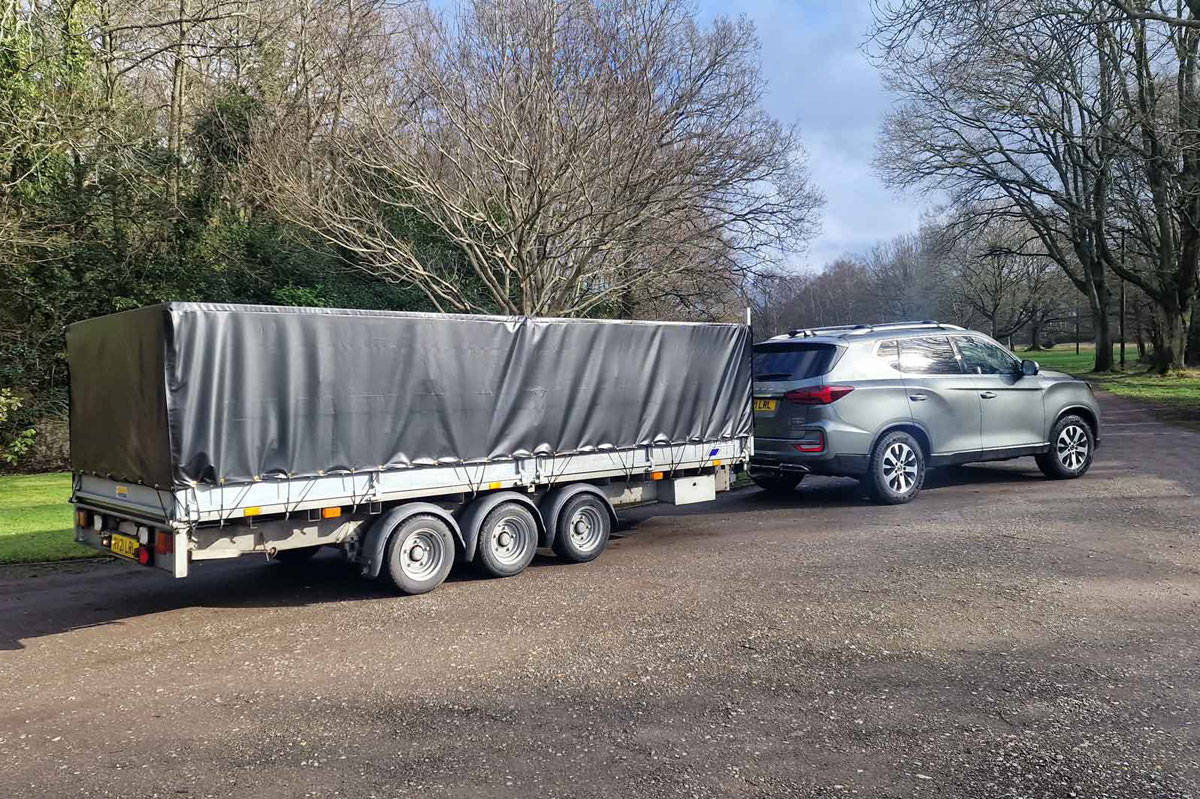
Since the law changed in December 2021, most drivers no longer need to pass a separate B+E driving test before towing a trailer or caravan with a car. But being legally entitled to tow doesn’t necessarily mean you’re confident or properly prepared to do it.
If you’ve never towed before, or haven’t towed for many years, professional towing lessons can help you learn the practical skills needed to hitch, reverse, manoeuvre and tow a trailer safely.
What Changed With the B+E Towing Law in 2021?
Before the rules changed, many drivers who passed their car driving test from 1 January 1997 onwards had restrictions on the car and trailer combinations they could drive without passing an additional B+E test.
In December 2021, the separate car and trailer driving test was removed in Great Britain. Eligible drivers were subsequently given the B+E entitlement without having to take the additional test. You can check the current GOV.UK rules on towing with a car for details of what your driving licence allows you to tow.
This means that many drivers can now legally tow combinations they may have had no previous experience of driving.
Do I Still Need Towing Lessons?
Towing lessons aren’t compulsory simply because you want to tow a trailer or caravan, but professional training can be extremely useful if you have little or no towing experience.
A trailer changes the way your vehicle behaves. You need to allow for the additional length and width of the combination, understand how the trailer reacts when reversing and become comfortable carrying out the necessary safety checks before travelling.
Practical towing training can be particularly useful if:
- You’ve never towed a trailer before.
- You’ve recently bought a caravan.
- You need to tow a trailer for work.
- You’re planning to tow a horse trailer.
- You find reversing or manoeuvring a trailer difficult.
- You haven’t towed for several years and want a refresher.
- You’re changing to a larger or heavier trailer.
What Do Towing Lessons Cover?
A good towing course should give you practical experience rather than simply explaining the theory.
Depending on your experience and the type of trailer you intend to tow, training can include:
- Pre-towing safety checks.
- Understanding vehicle and trailer weights.
- Correct hitching and unhitching.
- Checking the breakaway cable and electrical connection.
- Loading and weight distribution.
- Using towing mirrors correctly.
- Reversing and manoeuvring.
- Positioning the vehicle and trailer on the road.
- Cornering and dealing with junctions.
- Safe braking distances and speed management.
- Practical on-road towing.
Why is Reversing a Trailer Difficult at First?
Reversing is often the part of towing that new drivers find most challenging because the trailer initially moves in the opposite direction to the rear of the towing vehicle.
Small steering movements and good use of the mirrors make the process much easier. With practice, you’ll learn to recognise what the trailer is doing and make corrections before it moves too far off line.
During our towing courses, one of the techniques we teach is to steer towards the mirror that the trailer is moving across. This provides a simple reference point when learning how to control the trailer while reversing.
Should I Learn With My Own Vehicle and Trailer?
Where suitable, training with your own towing vehicle and trailer can be particularly useful because you’re learning with the combination you’ll actually use afterwards.
It also gives you the opportunity to become familiar with your own hitch, electrical connections, mirrors and other equipment.
If you don’t yet have a suitable trailer, training can also be completed using a training trailer.
What About Caravan and Horse Trailer Towing?
The basic principles of towing apply to different types of trailer, but the way the trailer will be used can affect the training that’s most useful.
Caravan owners often want additional practice with reversing, positioning and manoeuvring before their first trip away. You can find out more about our caravan towing lessons.
Horse trailer drivers also need to consider smooth acceleration, braking and cornering because of the effect that the journey can have on the horse. Our horse trailer towing lessons are designed specifically for this type of towing.
Towing Lessons in Farnborough
Matt Price Driver Training provides practical trailer towing lessons from our training ground in Farnborough, close to Junction 4 of the M3.
Courses cover the practical skills needed to tow confidently, including hitching, safety checks, reversing, manoeuvring and on-road driving.
Training is normally provided on a 1-to-1 basis, although two people can train together if required. You can use your own suitable vehicle and trailer or, depending on the course, train using our equipment.
The B+E towing law may give you the entitlement to tow, but entitlement is only part of the picture. If you’re new to towing, practical training can give you the skills and confidence to tow safely.