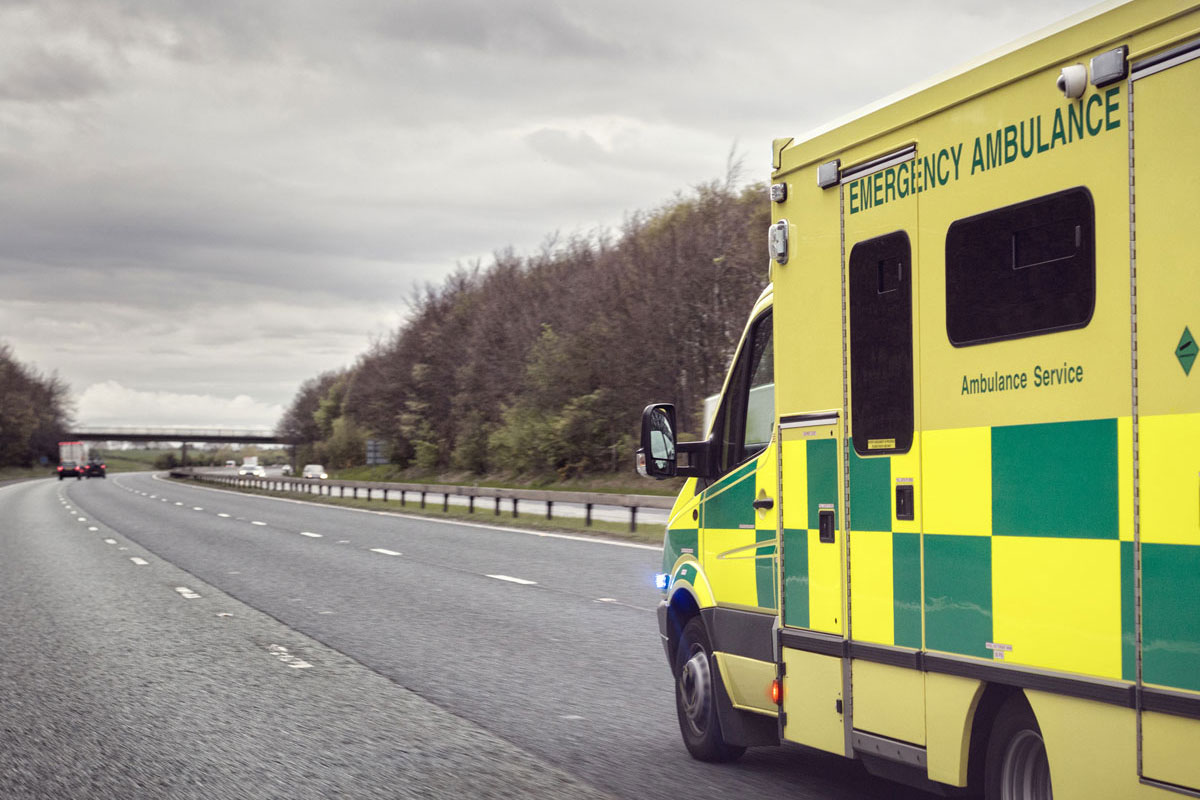
If you’re training to become a paramedic or applying for an ambulance driving role, you may need a Category C1 licence before you can drive an ambulance.
Many ambulances have a Maximum Authorised Mass (MAM) of more than 3,500kg, which puts them outside the standard Category B car licence entitlement for many drivers. A Category C1 licence allows you to drive vehicles with a MAM between 3,500kg and 7,500kg.
For student paramedics, getting a C1 licence is therefore often an important step before starting work or progressing through university and ambulance service requirements.
Do All Ambulances Require a C1 Licence?
No. Whether you need a C1 licence depends on the weight of the vehicle you will be driving and the driving licence entitlement you already hold. However, many frontline ambulances fall within the Category C1 weight range, so C1 is commonly required by ambulance services and for paramedic roles.How Do I Get a C1 Licence for Ambulance Driving?
If you don’t already have Category C1 entitlement on your driving licence, the process normally involves:- Applying for provisional C1 entitlement using the DVLA D2 application form and completing the required D4 medical examination report. You can find the current application requirements on the official GOV.UK guidance.
- Passing the C1 theory tests – the multiple-choice and hazard perception tests.
- Completing practical C1 driver training in a suitable Category C1 vehicle.
- Passing the Module 3a test, which covers the off-road reversing exercise.
- Passing the Module 3b test, which is the on-road practical driving test.